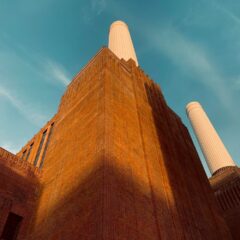

Step off the busy arteries of the City and you’ll find it: a ruin that isn’t quite a ruin, a church that isn’t quite a church, and a garden that feels like a secret only London could keep. St Dunstan in the East is the kind of place you don’t stumble upon accidentally — you discover it, like treasure, whispered down the generations of city wanderers.

A Ruin With Nine Lives
The story begins around 1100 AD, when a modest stone church was raised on St Dunstan’s Hill, halfway between London Bridge and the Tower. It expanded, weathered centuries, and even survived the Great Fire of London in 1666. Only “damaged,” it was patched up rather than rebuilt — but Sir Christopher Wren later gave it a steeple that still pierces the skyline today, a slender Gothic needle standing proud on flying buttresses.
In 1821, after years of structural failure, the nave and aisles were replaced by a new Gothic revival building. Then came the Blitz. In 1941, bombs fell. Flames took the roof, the windows, the pews — all that survived were the tower, Wren’s steeple, and fragments of wall.
And here’s the twist: the Church of England never rebuilt. Instead, the ruins were left to breathe. By the late 1960s, the City Corporation transformed the skeletal remains into a public garden. St Dunstan became something stranger and more alluring than its original design: a ruin made deliberately permanent, a place where nature and stone share custody.
Nature Moves In
Walk through its arches today and you step into another world. Ivy threads up broken window frames. Palms stretch towards the sky where a roof once was. A fountain bubbles in the nave. Sunlight drops like gold coins through jagged walls, changing hour by hour.
On weekdays, it’s office workers eating sandwiches in hushed reverence; on weekends, it’s you and the sound of your own footsteps, echoing against history. The atmosphere feels at once wild and curated — the sort of cultivated disarray Instagram loves, but also the kind of beauty you want to keep quiet, to protect from too many footprints.

The Meaning of a Secret
Why does St Dunstan in the East matter? Because it reminds us that London is not just skyscrapers and sandwich chains. This ruin holds every layer of the city: medieval faith, Wren’s vision, Victorian re-engineering, wartime destruction, and post-war reinvention. It’s a palimpsest in stone.
There’s something gently radical about leaving ruins to remain ruins. A decision not to rebuild, but to let ivy and rainwater have their say. In a city that always reinvents, here is a place allowed to rest — and in that rest, to bloom again.
Visiting St Dunstan in the East
- Where: 20 St Dunstan’s Hill, EC3R 5DD — a three-minute walk from Monument or Tower Hill stations.
- When: Daily, 8 am until dusk. Free.
- What to Expect: It’s small — half an hour is enough to soak it in, but you may find yourself lingering longer. Bring a notebook, a camera, or just your lunch.
- Tip: Go early morning or at dusk if you want the place to yourself.
Main photo credit: Ulrich Janse van Vuuren
The Vulture Bees that make Meat Honey
The Falcon Sex Hat: How one man’s strange invention saved a species.
Where is Bridget Jones Flat?: The real life London location of the hit movie franchise.