
Sleek, elegant, and deceptively simple, the Millennium Bridge is one of London’s most arresting pieces of urban design—a steel ribbon stretched taut across the Thames, threading together the solemn grandeur of St Paul’s Cathedral with the industrial swagger of Tate Modern. It’s a pedestrian’s dream: panoramic views, car-free calm, and that satisfying feeling of floating just above the water, halfway between history and modernity.
But when it first opened in June 2000, the bridge did more than connect banks. It danced. Unexpectedly. Under the feet of excited Londoners came a gentle, undulating wobble—like walking across jelly in formal shoes. What was meant to be a triumph of modern engineering briefly became a national punchline. Within 48 hours, it was shut down, and London had a new nickname for it: the Wobbly Bridge.
Let’s rewind and explore how this futuristic footpath went from public embarrassment to beloved icon.
A Bridge for a New Millennium
Commissioned by the Millennium Commission and funded in part by the National Lottery, the bridge was one of several grand projects designed to celebrate the year 2000. Unlike the London Eye, which also opened that year and actually stayed upright and open, the bridge had more teething troubles.
It was the result of a unique collaboration between architecture, engineering, and… sculpture. Designed by Foster and Partners (that’s Lord Norman Foster to you), engineered by Arup, and sculpted—yes, sculpted—by artist Sir Anthony Caro, the Millennium Bridge was to be a minimalist masterpiece. No chunky supports, no Victorian frills. Just a taut, horizontal ribbon of steel gliding over the river like a blade.
At 325 metres long and 4 metres wide, it was the first new pedestrian-only crossing over the Thames in central London for over a century. Its sleek, low profile was intentional: it wouldn’t obscure the view of St Paul’s from the river, and in turn, you could walk across and feel part of a cinematic London panorama.
The Day London Took a Tumble
June 10th, 2000. A sunny Saturday. Tens of thousands of people were eager to try out this bold new bridge. Children, tourists, city workers, even the odd mayoral sash.
And then… the wobble.
To be clear, the bridge didn’t swing from side to side in an obvious or cartoonish way. It was subtler—more of a sinusoidal shimmy. But the more people felt it, the more they shifted their weight to compensate. This triggered a feedback loop: people’s footsteps synchronised with the movement, amplifying the sway. It was a case of “synchronous lateral excitation”—which sounds like something that might happen at a rave, but is in fact a documented phenomenon in structural engineering.
Panic didn’t quite ensue, but some mild vertigo did. A few people clung to the handrails, others tried to walk it off with the air of someone pretending they meant to dance like that. Incredibly, no one was injured. Still, two days later, engineers threw in the towel and shut it down.
Operation De-Wobble
The closure was an international embarrassment. Here was the capital of Cool Britannia unveiling a cutting-edge bridge… that couldn’t quite cope with people walking on it.
But Arup took their embarrassment on the chin and went to work. The solution? Add 91 tuned mass dampers—giant mechanical shock absorbers designed to cancel out the vibrations. Think of them as a set of industrial-grade paracetamol, treating the bridge’s motion sickness. After nearly two years and £5 million of retrofitting, the bridge re-opened in 2002, wobble-free.
Naturally, Londoners still call it the Wobbly Bridge. Because if there’s one thing this city loves more than cutting-edge design, it’s cutting-edge design gone slightly wrong.
A Walk to Remember
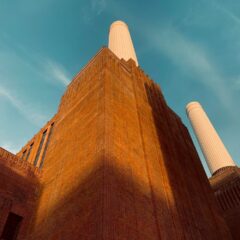
Today, the Millennium Bridge is one of London’s most-loved foot crossings. It’s not just a bridge, it’s a statement piece. Strolling across, you get a front-row view of St Paul’s dome rising like a godly cupcake, while behind you looms the brutal industrial beauty of the Tate Modern, a former power station now pulsing with art.
You also get a sense of London’s layers: ancient and modern, sacred and secular, all stitched together by a strip of steel that once had performance anxiety.
It’s starred in films (Harry Potter and the Half-Blood Prince saw it destroyed by Death Eaters, a metaphor for structural instability if ever there was one), music videos, and countless Instagram reels. The bridge is a catwalk for joggers, lovers, street performers, and stressed-out interns clutching Pret bags like Olympic batons.
Engineering the Unseen
What’s easy to miss, unless you’re a bridge nerd (no judgement), is how much thought went into making the bridge notstand out. Those taut suspension cables? They’re below deck, giving the bridge its shallow profile. This is what’s called a “lateral suspension” bridge—an unusual design, chosen specifically to maintain visual harmony with the skyline.
It’s also made largely of aluminium, giving it a silvery gleam and reducing its weight. The aluminium panels underfoot are ribbed for grip, and if you listen closely while you walk, they hum ever so slightly—a whispered echo of its wobbly past.
Legacy of a Wobble
The Millennium Bridge is a perfect London artefact. It’s stylish but flawed, innovative but human, bold yet self-deprecating. It tried to stride confidently into the future and immediately fell on its arse.
But like the city itself, it got up again. Now, over 4 million people cross it each year, unbothered by its wobbly beginnings. Perhaps that’s the real lesson of the bridge: even the shakiest starts can become something solid, even iconic.
And really, what’s more London than a high-profile fiasco turned beloved fixture?
Fun Fact: Chewing Gum Can Be Art
While your eyes might be on the skyline, look down—and you’ll discover a whole other universe beneath your feet. Enter Ben Wilson, the Chewing Gum Man. Since the early 2000s, Wilson has been painting tiny, intricate artworks onto the blobs of discarded chewing gum stuck to the bridge’s surface.
Armed with a blowtorch, acrylic paints, and an extraordinary degree of patience, Wilson transforms litter into beauty—turning grime into gallery. His miniature works depict everything from portraits to political messages to romantic dedications. He even takes commissions. Yes, you can propose to your beloved via old Wrigley’s Extra if you’re feeling avant-garde.
In a way, Wilson is the perfect counterpoint to the bridge itself: both began life a little messily, both were initially misunderstood, and both have become unexpected icons of the city’s eccentric creativity.