

London is a city of villages, each with its own quirks and contradictions, and Seven Sisters is no exception. Nestled in the borough of Haringey, this north London neighbourhood sits at the intersection of history, regeneration, and everyday London life. It’s a place where Victorian terraces meet bustling high streets, where a deep-rooted migrant community coexists with gentrification, and where a name steeped in legend has sparked endless pub debates.
Where Did the Name Come From?
One of the great joys of Seven Sisters is how its name invites speculation. Ask five locals, and you’ll likely get five different answers—some plausible, some absurd, all delightful.
The most widely accepted theory dates back to the 17th century, when seven elm trees were planted in a circle on what is now Page Green Common by, you guessed it, seven sisters. These weren’t just any sisters, though; they were part of a local family who supposedly wanted to leave their mark on the land before going their separate ways. Over the centuries, the trees were replaced several times, and today, a group of seven hornbeams stands as a nod to the area’s storied past.
There are, of course, more eccentric theories. Some claim it’s named after seven witches who once lived there, while others insist it has a mystical connection to the Pleiades star cluster. One particularly ambitious storyteller once told me the name was a corruption of ‘Seven Cisterns’, a reference to an ancient water system. Nobody could verify this, but that’s part of the fun.
A Multicultural Heartland
If you want a microcosm of London’s incredible diversity, Seven Sisters delivers. Walk down the Tottenham High Road or West Green Road, and you’ll pass Brazilian cafes, Colombian butchers, Ghanaian grocers, Polish bakeries, Turkish restaurants, and Caribbean takeaways. This area has long been a first port of call for new arrivals, and each wave of migration has left its mark, adding layers to the local culture and cuisine.

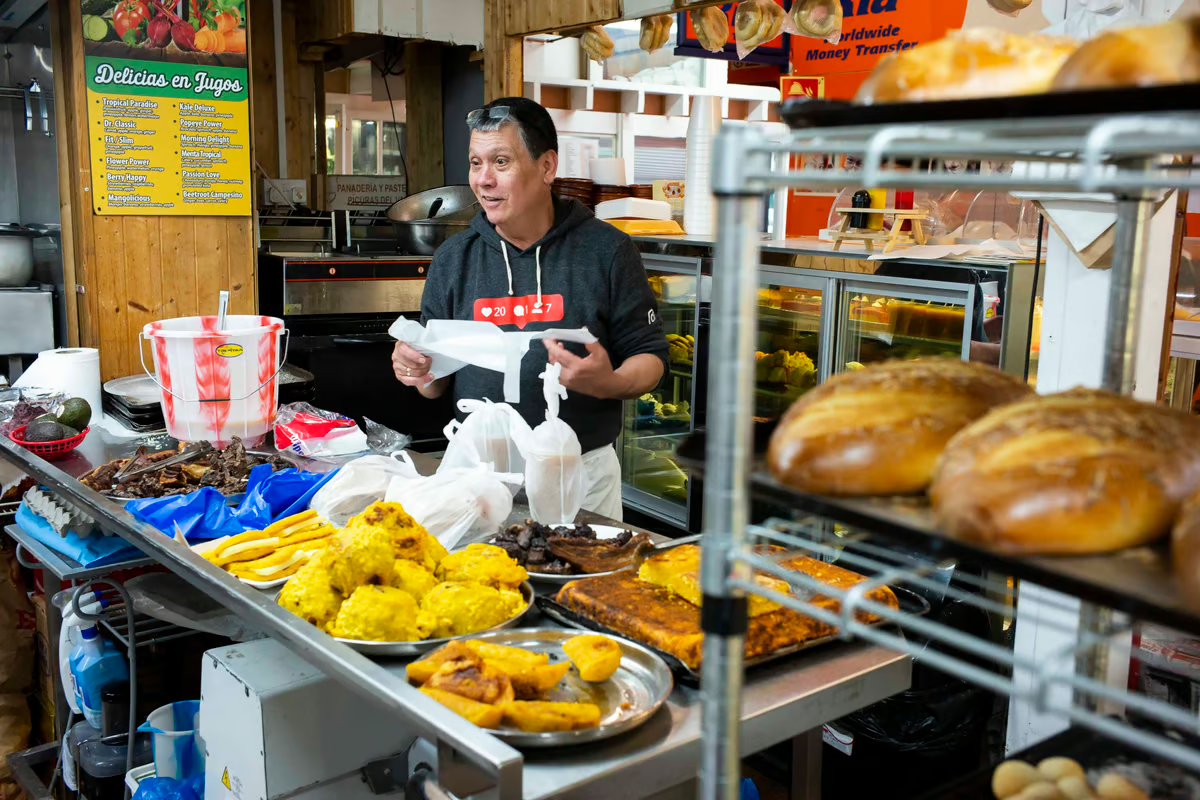
At the heart of this melting pot is Seven Sisters Indoor Market, also known as the Latin Village. This vibrant, slightly chaotic hub inside Wards Corner is a lifeline for London’s Latin American community. From hair salons to juice bars, record shops to pupuserias, the market hums with the energy of its traders and visitors. But it’s also been at the centre of controversy. Plans to redevelop the site have sparked years of protests, with campaigners arguing that the market is a vital cultural institution that should be protected from gentrification’s homogenising tide.
Football, Faith, and Fierce Loyalties
Any mention of Seven Sisters is incomplete without a nod to Tottenham Hotspur. While the club’s stadium is technically a bit further north, its presence looms large. On match days, the area transforms into a sea of white and blue shirts, as thousands of fans flood through Seven Sisters station en route to the ground. The club’s fortunes have an undeniable impact on local morale—when Spurs are flying high, so is the atmosphere in the surrounding streets; when they’re struggling, you can feel the collective frustration in the air.

Beyond football, Seven Sisters is home to a variety of faith communities. You’ll find churches, mosques, synagogues, and temples, each serving their congregations with dedication. This religious diversity is another thread in the rich tapestry of the neighbourhood, a place where different cultures don’t just coexist but actively interact.
Transport: The Good, the Bad, and the Overcrowded
For commuters, Seven Sisters is a blessing and a curse. On the one hand, it’s incredibly well-connected. The Victoria Line whisks you to Oxford Circus in around 15 minutes, and the Overground offers a quick route to Liverpool Street. Then there are the buses—so many buses—that make the area a transport hub for much of north London.
On the other hand, Seven Sisters station is chaos incarnate during rush hour. The escalators feel like a survival challenge, the platforms heave with commuters, and the entire thing occasionally grinds to a halt thanks to signal failures or mysterious ‘customer incidents’. Yet, somehow, people make it work—Londoners are nothing if not resilient.
Regeneration: Progress or Gentrification?
Like much of London, Seven Sisters is caught in the push-pull of regeneration. On one side, there’s investment in new housing, public spaces, and transport links. On the other, there’s the creeping feeling that all this change is less about the current residents and more about making the area appealing to wealthier newcomers.
The battle over Wards Corner is the most visible flashpoint. Developers have long had their eye on the site, promising shiny new apartments and retail spaces. But locals fear this would mean the erasure of the Latin Village and the displacement of the very communities that give Seven Sisters its soul. It’s a familiar London story—progress for some, displacement for others.
The Green Spaces You Didn’t Expect

Despite its urban character, Seven Sisters has its share of green escapes. Downhills Park and Chestnuts Park offer much-needed breathing space, perfect for a Sunday stroll, a game of five-a-side, or an impromptu picnic. And then there’s the Lee Valley, just a short distance away, where you can cycle along the canals, watch rowers glide through the water, or simply revel in the fact that, yes, there is nature in London.

Seven Sisters: Love It or Hate It, You Can’t Ignore It
Seven Sisters isn’t the polished, postcard-perfect London that tourists seek out. It’s a bit rough around the edges, a bit unpredictable, but that’s exactly what makes it interesting. It’s a place where you can find the best arepas outside Venezuela, where die-hard football fans nurse post-match beers, where buskers belt out songs in languages you don’t understand, and where the past and future collide in an endless, sometimes chaotic, dance.
In other words, it’s real London. And that’s something worth celebrating.